
Schönbrunn Zoo in Vienna - a UNESCO World Heritage Site in Vienna
Vienna has a way of making us think we have the day under control. We set off for Schönbrunn Palace, plan a walk through the gardens, perhaps a photograph by the Gloriette, and then notice the zoo on the map. It looks close enough to add as one more stop.
That is usually the moment we need to reconsider the plan. Schönbrunn Zoo, or Tiergarten Schönbrunn, is not a small attraction tucked behind the palace. It is a destination in its own right, with historic architecture, extensive animal habitats, places to eat, and enough paths to fill most of a day. If we tried to see it properly after a palace tour, we would spend much of the visit looking at the time.

The zoo occupies part of the Schönbrunn estate in Vienna’s 13th district. Its setting is one reason we find it so appealing. We can move from the formal paths of a former imperial residence into a landscape of trees, animal houses and unexpected encounters, all without leaving the palace grounds. The experience feels distinctly Viennese: history is always nearby, but it never gets in the way of enjoying the present.
Here is how we would plan a visit, what we would make time for, and the practical details that matter before setting off.
The Zoo That Began as an Imperial Menagerie
Schönbrunn Zoo was founded in 1752 by Emperor Franz I Stephan of Lorraine, the husband of Maria Theresa. It is recognised as the world’s oldest continuously operating zoo. At its centre stands the historic Emperor’s Pavilion, a reminder that the grounds were originally created for the imperial court rather than for the crowds who visit today. The zoo is part of the Schönbrunn UNESCO World Heritage site.
We think that history makes the visit more interesting, but not because every path needs a history lesson. It is the contrast that stays with us. Around one corner, the layout and architecture recall an eighteenth-century royal estate. Around the next, we find a modern habitat designed around animals whose needs were barely understood when the menagerie first opened.
It is also worth acknowledging that the original imperial menagerie and a modern zoo are very different ideas. Today, Schönbrunn presents its work through animal care, education, research and conservation projects. We find it more useful to look at the place through both lenses: as a remarkable piece of Vienna’s history and as an institution that needs to demonstrate what it contributes now.

How Big Is Schönbrunn Zoo?
The zoo covers about 17 hectares and is home to roughly 500 animal species. That sounds manageable until we start walking. The grounds have an upper and lower area, and the uphill sections become much more noticeable when we are travelling with small children, pushing a stroller, or trying to squeeze the zoo into a crowded sightseeing day.
Our advice is simple: think of this as a substantial outing. We would allow at least half a day, and we would be happier with longer if the zoo were the main event. The aim is to have time to pause when an animal is active, go back to an exhibit we enjoyed, and sit down for a meal without treating every break as lost sightseeing time.
What We Would See First
There is no perfect route through a zoo this size. Animals do not work to our schedule, and the exhibit we most want to see might be quiet when we arrive. We prefer to choose a few priorities, then leave room for the visit to surprise us.

The Giant Pandas
For many visitors, the giant pandas are the first priority. Schönbrunn’s current pair are Lan Yun and He Feng. The female and male have separate enclosures, reflecting the solitary nature of adult giant pandas. The panda facilities have been modernised, and visitors can also see the area from the Emperor’s Pavilion.
We would visit them early rather than promising ourselves we will come back at the end. Pandas can be wonderfully uncooperative from a sightseeing perspective.
They may be eating, moving about, resting or sitting somewhere that gives us only a partial view. That uncertainty is part of visiting living animals. If we have time later, we can always try again.
The location adds another layer to the experience.
Watching a panda from the historic heart of a zoo founded in 1752 is a combination we would not find in many places. It neatly captures why Schönbrunn feels different from a newer animal park built entirely from scratch.
Polar Bears, Penguins and Sea Lions
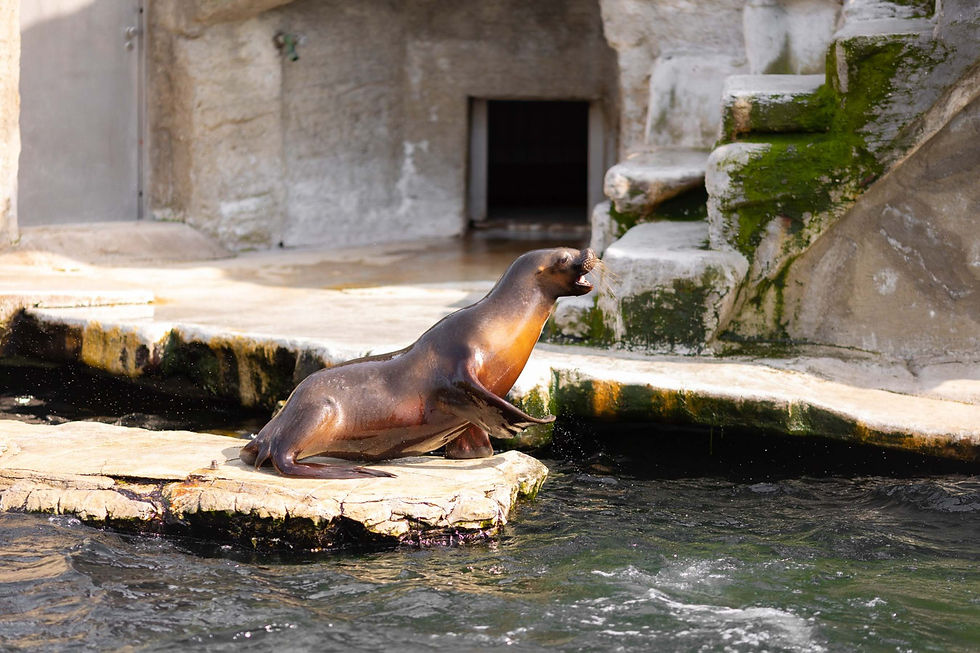
The colder habitats make a good change of pace after the panda area. The zoo’s Polar Bear World includes underwater viewing, giving visitors the chance to see how differently a bear moves once it enters the water. The Polarium is home to seals and penguins, while the sea lion area is another place where visitors often stop for longer than they expected.
We would check the day’s feeding information when we arrive. Seeing an animal at feeding time can add useful context, especially when keepers explain behaviour or conservation work. We would treat those times as an opportunity, though, rather than planning the whole day around reaching every scheduled event.

A Walk Through Different Habitats
One of the pleasures of Schönbrunn is how quickly the mood changes as we move between areas. We can go from the polar habitats to the Rainforest House, then on to birds, large mammals or the South America Park. That last area brings animals such as capybaras, anteaters, rheas and vicuñas into a shared landscape.
We find these transitions more memorable than trying to count how many species we have seen. A child might want to return to a familiar favourite, while an adult becomes unexpectedly absorbed by an animal they had barely heard of before arriving. The zoo works best when we allow both things to happen.
We would also leave space for the quieter exhibits. It is easy to hurry towards the animals with the biggest reputations and overlook an unusual bird, a small reptile or a habitat where the interesting detail takes a minute to notice. Those less crowded pauses can become some of the best moments of the visit.

The Tirolerhof: A Different Side of the Zoo
The Tirolerhof, in the upper part of the grounds, is dedicated to rare and endangered Austrian livestock breeds. It brings the story much closer to home after a morning spent looking at animals from other continents. We like that change of perspective. Conservation is not only about distant rainforests or famous species; it can also concern the animals and agricultural traditions of this region.
Getting up there requires a little thought. The route involves a climb, so we would decide early whether the upper area belongs in our plan. A family with energetic children may enjoy working its way uphill. Someone managing limited mobility will want to look at the zoo map and transport options before setting off.
There is a zoo transfer train between the Elephant House and the Tirolerhof, with a separate fare. The zoo says it can accommodate strollers and wheelchairs. That can be a useful option when we want to see the upper section without spending our energy on the climb.
Is Schönbrunn Zoo Good for Children?
Yes, and the strongest reason is its variety. Children can see animals they recognise immediately and others they have never encountered, with plenty of outdoor space between the exhibits. A zoo visit also gives a family more freedom to change its plans than a timed palace tour. We can stop for food, take a longer break, or head back to one area if that is what everyone wants.
We would still resist the temptation to make a checklist of every animal. Younger children may spend fifteen minutes watching one enclosure and walk straight past something adults consider a highlight. We think that is perfectly fine. A good family visit is usually measured by curiosity and energy, not by the number of exhibits completed.
There are practical limits to keep in mind. Children under 14 normally need to be accompanied by an adult, and some indoor animal houses close before the zoo itself. If there is a particular house your family wants to visit, we would go there earlier in the day rather than leaving it until closing time.

Our Approach to a Family Visit
We would choose two or three priority areas before entering, collect a zoo map, and then follow the day’s energy. A morning visit gives us more flexibility. By lunchtime we can decide whether we want a full day at the zoo, a quieter afternoon in the Schönbrunn gardens, or a straightforward journey back into the city.
We would also dress for a real walk. Comfortable shoes matter more here than they do for a quick look at the palace courtyard. On a warm day, we would carry water and take the shaded paths when possible. In colder months, we would alternate outdoor exhibits with animal houses and keep an eye on the earlier closing time.
Where We Would Stop for Food
We would not assume we need to leave the grounds as soon as we get hungry. The zoo has several cafés, restaurants and smaller food stops, each fitting a slightly different kind of break.
The Emperor’s Pavilion is the obvious choice when we want to sit down in a historic setting. Its terrace overlooks nearby animal areas, making it feel like part of the visit rather than an interruption. Café Restaurant ORANG.erie offers a more contemporary setting near the orangutans and a playground. Higher up, the Tirolergarten Tavern makes sense if we have worked our way towards the Tirolerhof. For a quick coffee or cake near the main gate, there is Café Hietzing.

We would check the food options on the day, especially in the quieter seasons, and avoid promising children a meal at one particular place before confirming it is open. If the weather is lovely, we would also make room simply to sit for a while. Schönbrunn has enough atmosphere that a break does not need to be rushed.
How to Combine the Zoo With Schönbrunn Palace
The palace and zoo share the same estate, so combining them is tempting. Whether we recommend it depends on the kind of day we want.
If Schönbrunn is new to us and we want a full palace tour, time in the gardens, photographs at the Gloriette and a relaxed zoo visit, we would split those experiences across two days. There is enough at each one to justify the space. Trying to finish all of them in a single afternoon could leave us enjoying none of them properly.
If we have only one day, we would make a choice about the main attraction. We could visit the palace in the morning, walk through the gardens and spend a shorter afternoon at the zoo. Alternatively, we could give the zoo the larger part of the day and enjoy the palace exterior and gardens afterwards. The latter would be our preference with children who are more interested in animals than imperial rooms.
The zoo has three entrances: Hietzing, Neptun and Tirolerhof. Neptun is useful when moving between the zoo and the palace area, while Hietzing is convenient for public transport. Tirolerhof sits uphill near the Gloriette. Knowing there are several entrances makes it much easier to plan a route through the estate without retracing every step.

What About the Desert House?
The Desert House is close to the Hietzing entrance, opposite the Palm House, but it is a separate attraction with its own ticket and opening hours. We would decide whether to include it before buying tickets rather than assume it is part of standard zoo admission.
Inside, its route explores desert habitats and the plants and animals adapted to them. It is an appealing addition if we have the time and a particular interest in smaller species or unusual environments. If our day already includes the palace and zoo, we would probably save it for another visit.
Getting to Schönbrunn Zoo
For most visitors, we think public transport is the easiest option. Take the U4 underground line to Hietzing. From there, enter the Schönbrunn grounds through Hietzinger Tor and follow the path between the Palm House and Desert House to the zoo’s main entrance. Several tram and bus routes also serve the area.
If we were driving, we would plan parking in advance rather than expect to find a convenient space at the gate. The zoo lists park-and-ride options and a limited public car park at Seckendorff-Gudent-Weg. That car park leads to the upper Tirolergarten entrance, where the route down to the main zoo area is steep. It would not be our first choice for a visitor using a wheelchair.
For navigation, the useful address is Seckendorff-Gudent-Weg, 1130 Vienna if arriving by car. If arriving by underground, we would search for Schönbrunn Zoo, Hietzing entrance and follow the signs from Hietzinger Tor.

Tickets and Opening Hours
Schönbrunn Zoo opens every day at 9:00 a.m., including public holidays. Its closing time changes with the season, from 4:30 p.m. in the shortest winter period to 6:30 p.m. from April through September.
The last entry is 30 minutes before closing. Some animal houses close earlier, so a late ticket will not give us the same experience as arriving in the morning.
At the time of writing, a standard day ticket costs €29 for adults and €17 for children and teenagers aged 6 to 18.
Children under 6 enter free. Reduced rates and other ticket options are listed on the zoo’s website.
Prices can change, so we would check the official page when planning a visit rather than rely on an old screenshot or a third-party listing.
For locals or anyone staying in Vienna for longer, the annual ticket is worth a look.
We like the idea of visiting a zoo in shorter stretches, perhaps returning at a different time of year, instead of feeling obliged to see everything on one paid day.
The current annual ticket also includes admission to the Desert House.

When Would We Visit?
If we could choose freely, we would arrive near opening time. An early start gives us a quieter beginning, plenty of daylight and the freedom to change our route when an exhibit captures our attention. We would check the weather, but we would not dismiss the zoo just because it is not a perfect sunny day.
Spring and autumn suit a long walk particularly well. Summer gives us the longest opening hours, although we would plan breaks and shade. Winter is a different outing: shorter, often quieter, and best approached with a smaller list of priorities because the zoo closes earlier. Since it opens all year, we can choose the kind of visit that fits our trip rather than assume there is only one right season.
We would also check the zoo’s current map and feeding schedule before arriving. Exhibits, access and animal routines can change. A little planning helps, but we would leave the timetable loose enough to enjoy what is happening in front of us.

Our Impression - Is Schönbrunn Zoo Worth It?
We think it is, especially if we give it the time it deserves. The world’s oldest zoo could have relied on its history alone, but the visit is more compelling because that history sits alongside a large, active animal park. It belongs to the Schönbrunn experience while feeling different from the palace and formal gardens around it.
What we like most is that the day can take several forms. We can come for the pandas, become interested in the quieter habitats, stop in a Baroque pavilion for lunch, and finish with a walk through the palace grounds. Families can build the visit around their children’s pace. Adults travelling without children can take just as much pleasure in the setting, the architecture and the chance to look more closely.
Our one firm recommendation is to avoid treating the zoo as an afterthought. Give it a morning at minimum, wear shoes you would choose for a proper walk, and keep the rest of your Schönbrunn plans realistic. Vienna has many beautiful places to hurry past. This is one we would rather explore slowly.

Official website: zoovienna.at/en
Current hours and tickets: Vienna Zoo visitor information
Directions: How to get to Schönbrunn Zoo
=


Comments