
Top 10 Art Museums and Galleries in Vienna in 2026
Vienna is often described as an open-air museum, but the real treasures begin when we step through its palace doors, climb its monumental staircases and enter the smaller contemporary galleries hidden behind the elegant façades of the city centre.
Art in Vienna is not limited to a few famous paintings.
The city offers everything from Renaissance masterpieces and imperial collections to Viennese Modernism, provocative contemporary installations, photography, design and experimental art.

We have visited many of these places more than once, and our strongest advice is not to treat them as boxes that need to be ticked. Vienna has enough art to fill an entire week. It is much better to choose two or three places that genuinely match your interests and give them the time they deserve.
This guide brings together the seven art museums and institutional exhibition spaces that we consider essential, followed by three important Vienna galleries. The galleries are especially interesting because they reveal a more current and less touristy side of the city’s art scene, and admission is usually free.
1. Upper Belvedere - The Essential Klimt Museum
If this is your first trip to Vienna and you only have time for one major art museum, we would choose the Upper Belvedere.
The museum is located inside a magnificent Baroque palace surrounded by formal gardens and impressive views over Vienna. The architecture alone is worth seeing, but most visitors come for one particular reason: Gustav Klimt’s The Kiss.
We have all seen this painting reproduced on posters, bags, notebooks and souvenirs, but the original feels completely different. Its gold surfaces, texture and intimate details are far more powerful when you are standing directly in front of it.
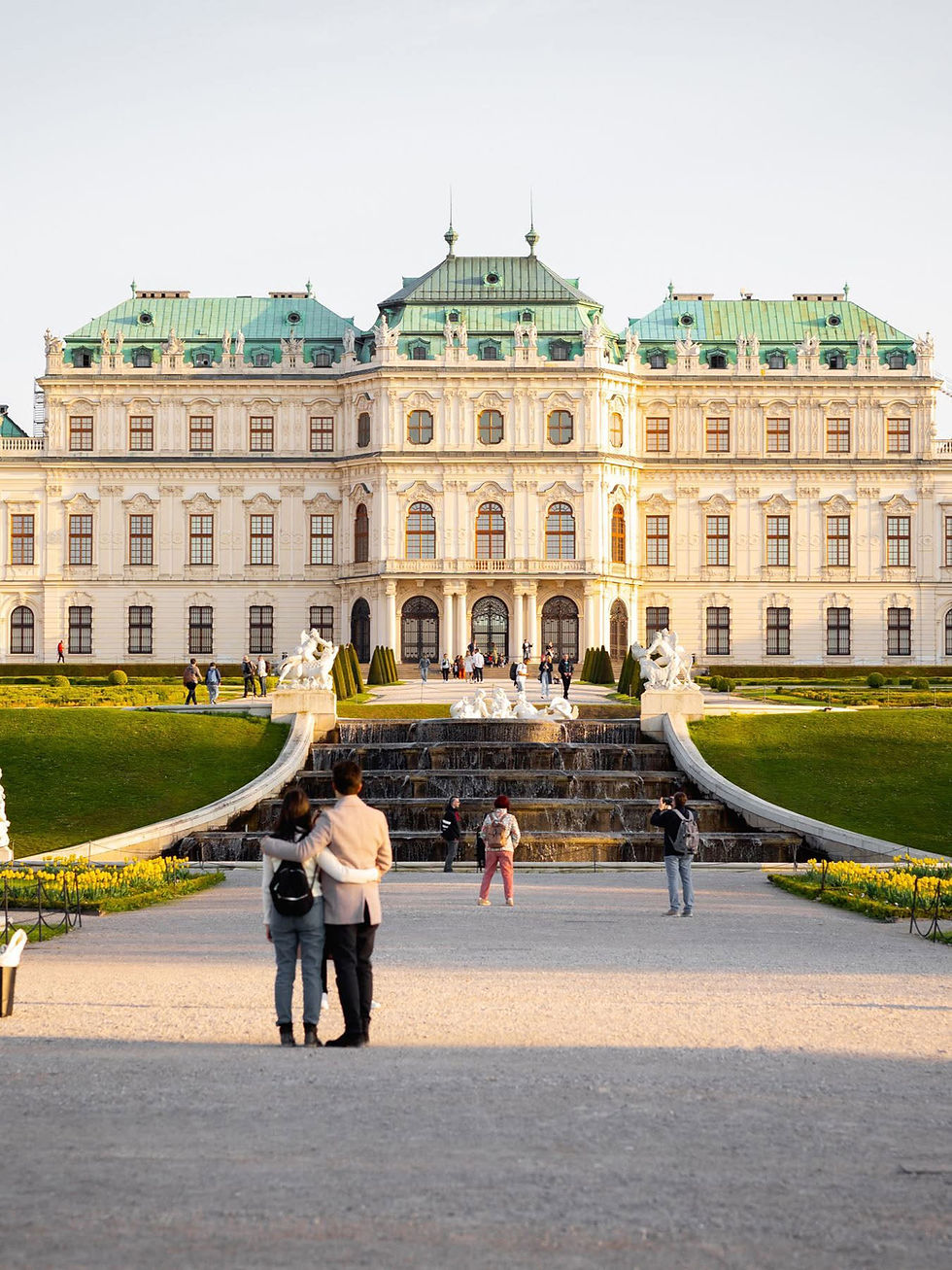
The Belvedere holds the world’s largest collection of paintings by Klimt. Alongside The Kiss, visitors can see works connected to different stages of his career. The collection also includes art by Egon Schiele, Oskar Kokoschka, Ferdinand Georg Waldmüller and other important Austrian artists.
What makes the Upper Belvedere particularly useful for a first visit is the way it presents Austrian art across several centuries. You can move from medieval religious works to Baroque art, nineteenth-century painting and the revolutionary atmosphere of Vienna around 1900.
The Upper Belvedere can become crowded, especially around The Kiss. We recommend booking a timed ticket and arriving early in the morning. Once you finish inside, leave at least 30 minutes for the gardens. Entry to the gardens is free, and the view toward the Lower Belvedere is one of the most beautiful in Vienna.
Practical information
Address: Prinz-Eugen-Straße 27, 1030 Vienna
Opening hours: Daily, normally from 9:00 am to 6:00 pm, with extended hours on selected summer dates
Time needed: Approximately 2 hours
Website: belvedere.at
2. Albertina Museum - From Dürer to Picasso
The Albertina is one of the easiest museums to include in a central Vienna itinerary. It stands close to the State Opera, Hofburg Palace, Burggarten and Kärntner Straße, which means you can combine it naturally with many of the city’s main attractions.
The museum is famous for its exceptional graphic collection, including drawings and prints by artists such as Albrecht Dürer. However, the Albertina offers much more than works on paper.
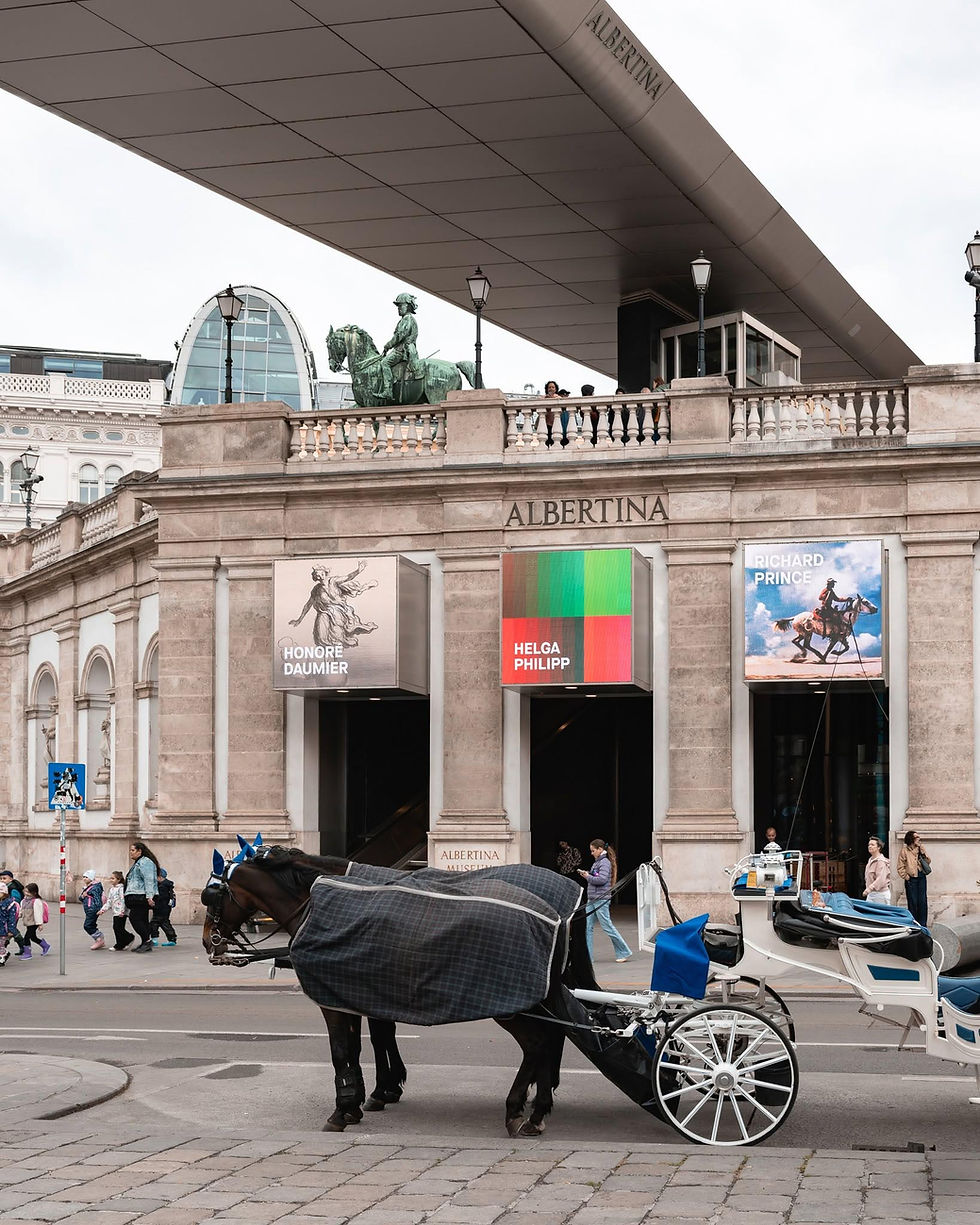
Its permanent and temporary exhibitions include Impressionism, Expressionism, early modern art, photography and works by internationally recognized artists. Depending on the exhibition program, visitors may encounter Monet, Degas, Cézanne, Picasso, Chagall, Matisse and many other major names.
Another highlight is the collection of Habsburg State Rooms. These elegant interiors remind us that the Albertina was once a residential palace. The contrast between historic rooms, silk wall coverings and modern exhibition galleries gives the museum a distinctive atmosphere.
The Albertina celebrates its 250th anniversary in 2026, making this a particularly interesting year to visit. Its vast collection is far too large to be displayed at once, so temporary exhibitions are an essential part of the experience.
The Albertina works well for visitors who want variety. It is not dedicated to only one movement or period, and every visit can feel different. We particularly enjoy visiting on Wednesday or Friday evening, when the museum remains open later and the atmosphere becomes calmer.
Practical information
Address: Albertinaplatz 1, 1010 Vienna
Opening hours: Daily from 10:00 am to 6:00 pm; Wednesday and Friday until 9:00 pm
Time needed: Between 2 and 3 hours
Website: albertina.at
3. Kunsthistorisches Museum - Vienna’s Grand Museum of Old Masters
The Kunsthistorisches Museum, commonly known as the KHM, is not simply a building filled with paintings. It is one of the most magnificent museum experiences in Europe.
The museum was built to display the imperial collections of the Habsburg dynasty, and it was designed to impress. Marble, painted ceilings, monumental staircases and elaborate decoration make the interior feel almost as important as the artworks.
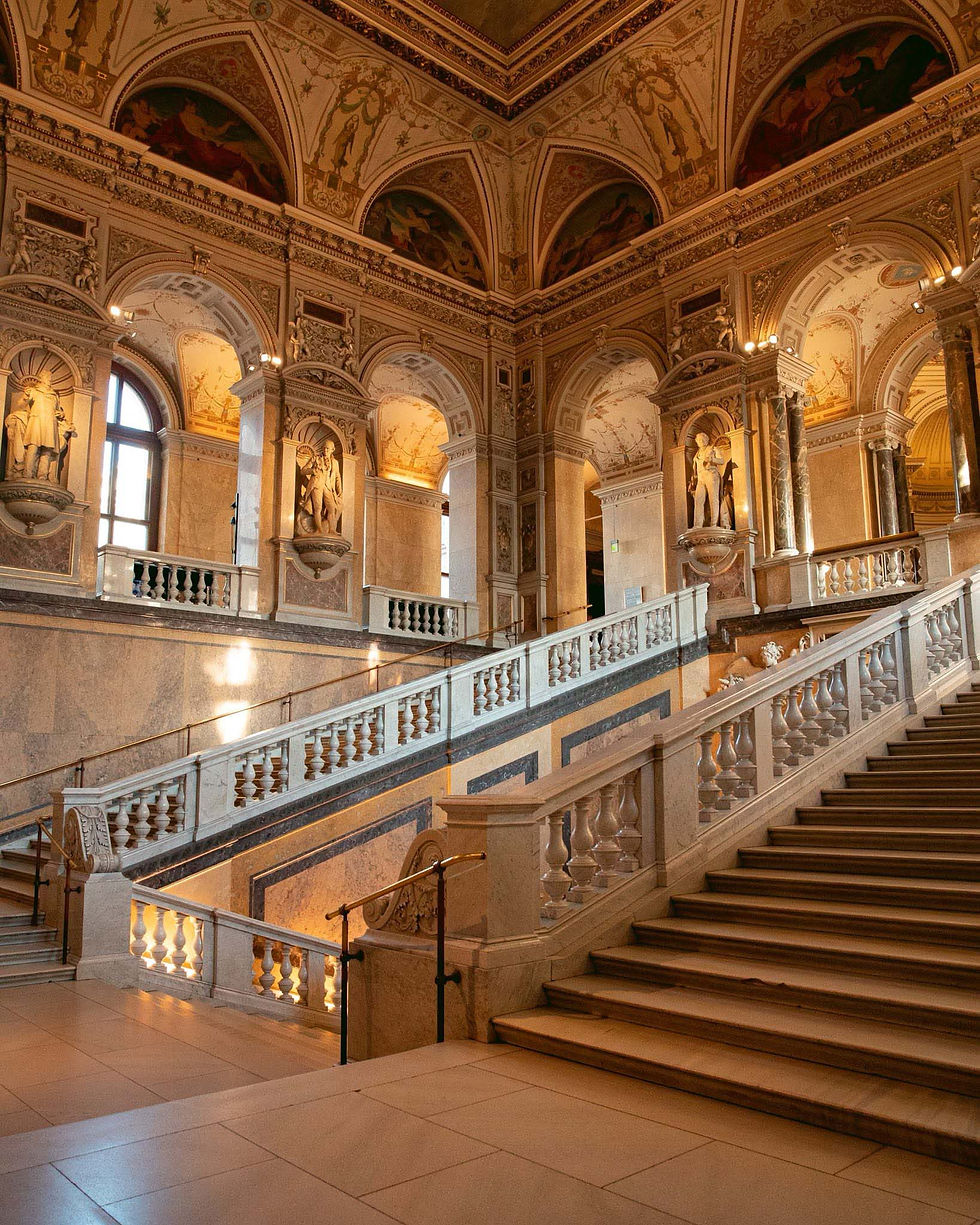
The Picture Gallery contains works by Titian, Raphael, Velázquez, Caravaggio, Rubens, Vermeer and many other European masters. The museum is especially famous for its collection of paintings by Pieter Bruegel the Elder.
Standing in front of Bruegel’s The Tower of Babel is one of those museum moments that cannot be recreated on a screen. The painting is filled with tiny figures, architectural details and individual scenes that slowly appear the longer we look.
Before entering the main galleries, stop on the grand staircase and look up. The decorative paintings include early work by Gustav Klimt, created before he developed the golden style that later made him famous.
The KHM also contains Egyptian, Greek and Roman antiquities, sculpture and an extensive Kunstkammer filled with objects collected by the Habsburgs.
Trying to see the entire museum in one visit can become exhausting. We recommend choosing two main areas, usually the Picture Gallery and Kunstkammer, and taking a proper break in the beautiful museum café beneath the dome.
Practical information
Address: Maria-Theresien-Platz, 1010 Vienna
Opening hours: Daily from 10:00 am to 6:00 pm; Thursday until 9:00 pm
Time needed: At least 3 hours
Website: khm.at
4. Leopold Museum - The Best Place to Understand Vienna Around 1900
The Leopold Museum is one of our favourite places for understanding Vienna’s artistic identity.
Located inside the MuseumsQuartier, it focuses strongly on the period around 1900, when Vienna became one of Europe’s most influential centres of art, architecture, psychology, literature and music.
The museum is best known for its outstanding collection of works by Egon Schiele. His self-portraits, landscapes and human figures can feel fragile, emotional, direct and sometimes uncomfortable. Seeing several of them together helps us understand why his work was considered so radical.

Gustav Klimt is also represented, alongside artists such as Richard Gerstl, Oskar Kokoschka and Koloman Moser. Furniture, posters and decorative objects help connect the paintings to the wider visual culture of Vienna.
The permanent presentation dedicated to Vienna 1900 is particularly valuable for visitors who want to understand the relationship between art, design and daily life during this period.
In 2026, the Leopold Museum celebrates its 25th anniversary. The anniversary program gives visitors another reason to explore a museum that is sometimes overshadowed by the Belvedere, despite having one of the strongest collections of Austrian Modernism.
If you see The Kiss at the Belvedere, continue to the Leopold Museum to discover the more vulnerable and rebellious side of Viennese art. The two museums complement one another extremely well.
Practical information
Address: Museumsplatz 1, 1070 Vienna
Opening hours: Normally from 10:00 am to 6:00 pm; from September 2026, the museum is closed on Tuesdays
Time needed: Approximately 2 hours
Website: leopoldmuseum.org
5. mumok: Vienna’s Museum of Modern Art
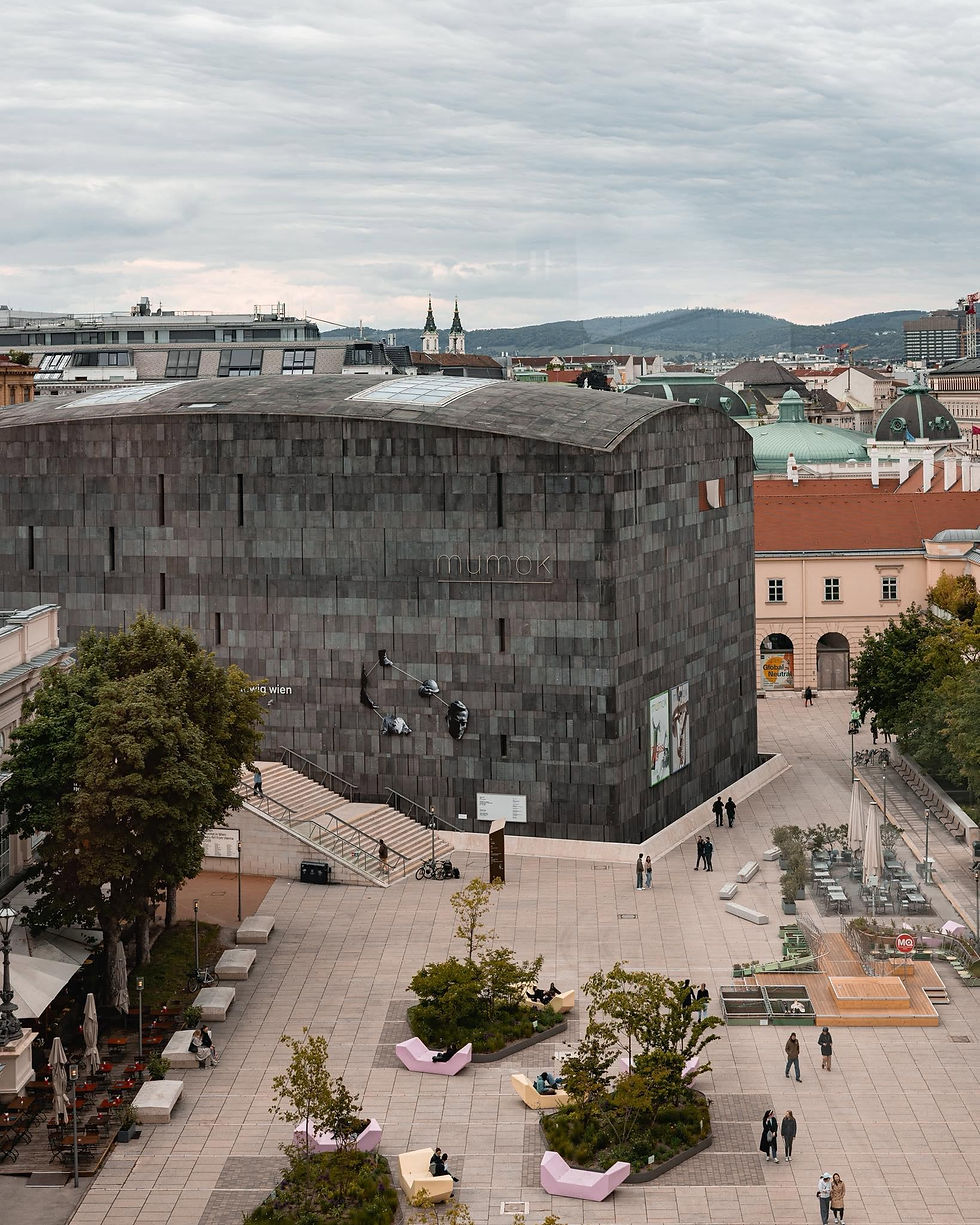
Directly opposite the Leopold Museum stands mumok, the Museum of Modern Art Ludwig Foundation Vienna.
The contrast between the two buildings is striking. The Leopold Museum appears bright and geometric, while mumok rises from the MuseumsQuartier like a dark stone block.
Even before entering, the architecture tells us that this will be a different experience.
The museum’s collection covers modernism, Pop Art, Fluxus, conceptual art, photography, performance, film and contemporary installations. Visitors may encounter works associated with Pablo Picasso, Andy Warhol, Roy Lichtenstein, Claes Oldenburg and numerous Austrian and international artists.

mumok is not designed to provide only familiar or decorative art. Some exhibitions are deliberately challenging. They explore politics, identity, technology, social change and the boundaries of what we define as art.
That does not mean visitors need specialist knowledge. We find that mumok works best when we enter without expecting to understand everything immediately. Sometimes one room or one installation is enough to change the way we think about the entire exhibition.
We would not choose mumok as the first museum for someone interested only in classical painting. However, contemporary art lovers should place it near the top of their Vienna list.
Its location makes it easy to combine with the Leopold Museum. If you plan to visit both, take a break between them in the MuseumsQuartier courtyard.
Practical information
Address: Museumsplatz 1, 1070 Vienna
Opening hours: Tuesday to Sunday and on public holidays, from 10:00 am to 6:00 pm
Time needed: Between 1.5 and 2 hours
Website: mumok.at
6. MAK - Art, Architecture and Design Under One Roof
The MAK, Vienna’s Museum of Applied Arts, is often missed by visitors who concentrate only on famous paintings. We believe that is a mistake.
The museum explores how art enters daily life through furniture, architecture, glass, textiles, posters, ceramics, patterns and industrial design. It is especially interesting for anyone who wants to understand Art Nouveau, the Vienna Secession and the Wiener Werkstätte.
One of its most important attractions is the presentation associated with Gustav Klimt’s designs for the Stoclet Frieze. The museum also contains furniture and decorative objects by artists and designers who believed that an entire room, and not only an individual painting, could become a work of art.
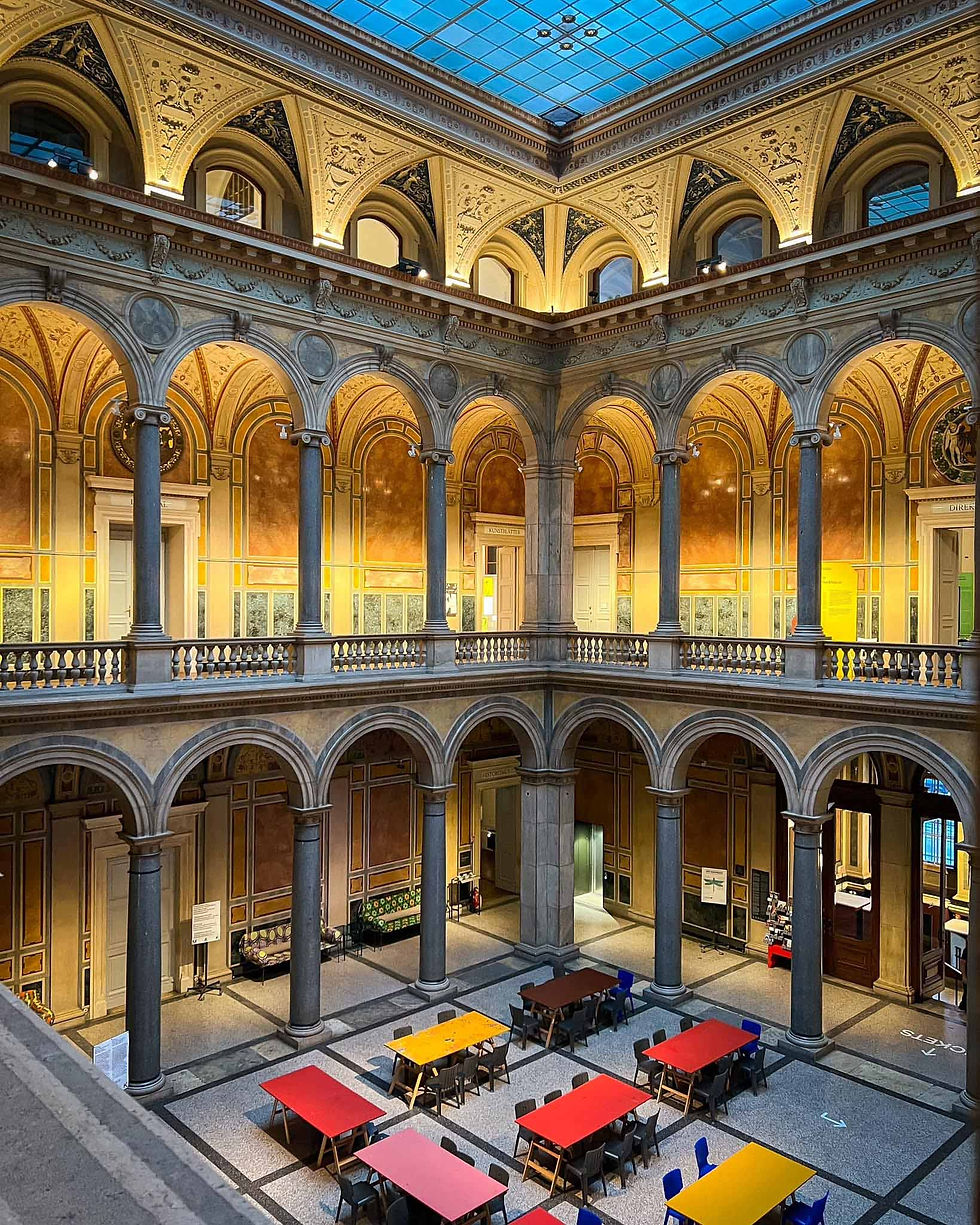
This makes the MAK an excellent companion to the Belvedere and Leopold Museum. At those museums, we see the paintings of Vienna around 1900. At the MAK, we see how the same artistic ideas influenced homes, chairs, tableware, fabrics and architecture.
The building itself is also worth noticing. Its historic interior provides an elegant setting, while the exhibitions often use modern and imaginative presentation methods.
The MAK is one of the best choices for returning visitors who have already seen Vienna’s most famous museums. It is also an excellent rainy-day attraction because the collection is varied enough to hold our attention for several hours.
Practical information
Address: Stubenring 5, 1010 Vienna
Opening hours: Tuesday from 10:00 am to 9:00 pm; Wednesday to Sunday from 10:00 am to 6:00 pm; closed Monday
Time needed: Approximately 2 hours
Website: mak.at
7. Vienna Secession - Klimt’s Beethoven Frieze and Living Contemporary Art
The Vienna Secession is smaller than the major museums on this list, but its importance to the city’s artistic history is enormous.
The building was created for a group of artists who broke away from Vienna’s conservative art establishment at the end of the nineteenth century. Its white geometric form and golden dome made it a revolutionary piece of architecture.
Above the entrance, visitors can see the famous motto stating that every age deserves its own art and that art deserves freedom. That idea remains relevant because the Secession is still used for contemporary exhibitions today.

The main historic attraction is Gustav Klimt’s Beethoven Frieze, created in 1902. The monumental work extends across three walls and represents humanity’s search for happiness. Seeing it in the room for which it was conceived is a completely different experience from viewing separate photographs.
The upper galleries contain changing contemporary exhibitions. Because the program changes frequently, the experience can vary significantly from one visit to another. During installation periods, only the Beethoven Frieze may be accessible, so we recommend checking the current program before arriving.
The Secession works particularly well as part of a walking route. It stands beside Naschmarkt and only a few minutes from Karlsplatz, the State Opera and the MuseumsQuartier.
The visit is relatively short, but the building and Beethoven Frieze make it one of the most distinctive art stops in Vienna.
Practical information
Address: Friedrichstraße 12, 1010 Vienna
Opening hours: Tuesday to Sunday from 10:00 am to 6:00 pm
Time needed: Between 45 and 75 minutes
2026 tip: Admission is free on the first Wednesday of every month
Website: secession.at
8. Galerie Krinzinger - One of Vienna’s Leading Contemporary Galleries
Galerie Krinzinger introduces us to a completely different side of Vienna’s art world.
This is not a traditional museum with a permanent collection. It is an active commercial gallery where exhibitions change regularly, artists develop new projects and collectors encounter work that may eventually appear in major institutions.
Founded by Ursula Krinzinger, the gallery has been an important name in Austrian and international contemporary art for decades. Its program is particularly associated with performance, conceptual art, photography, sculpture and experimental artistic practices.
The main space on Seilerstätte is located conveniently in central Vienna.
There is also a second location, Krinzinger Schottenfeld, in the seventh district. The Schottenfeld space often focuses on younger artists, residencies and more experimental presentations.
Some visitors feel nervous about entering a commercial gallery, particularly if they are not planning to buy anything. There is no reason to feel uncomfortable. The exhibitions are open to the public, and admission is normally free.
Galerie Krinzinger is an excellent place to see what is happening in contemporary art beyond Vienna’s large museums. The exhibitions are often compact, so the gallery can be combined easily with the Albertina, State Opera or Stadtpark.
Practical information
Main address: Seilerstätte 16, 1010 Vienna
Opening hours: Tuesday to Friday from 12:00 pm to 6:00 pm; Saturday from 11:00 am to 4:00 pm
Admission: Free
Time needed: Approximately 30 to 45 minutes
Website: galerie-krinzinger.at
9. Galerie nächst St. Stephan Rosemarie Schwarzwälder
Galerie nächst St. Stephan is one of the most respected contemporary galleries in Austria. Its central location makes it easy to visit, yet many tourists walk through the surrounding streets without knowing that such an influential art space is nearby.
The gallery has a long history within Vienna’s art scene. It has presented abstract painting, conceptual art, sculpture and installations by Austrian and international artists.
There is no permanent collection, which means every exhibition creates a new experience. On one visit, we may find large colourful canvases. On another, the rooms may contain minimal sculptures, photography or an installation that changes the way we perceive the architecture.
The gallery operates spaces on Grünangergasse and Domgasse, both in Vienna’s historic first district. The locations are close to St. Stephen’s Cathedral, Mozart’s former residence and some of Vienna’s most atmospheric narrow streets.
This is exactly the kind of place we enjoy discovering while walking through central Vienna. The visit may take only 20 or 30 minutes, but it reveals a side of the city that most conventional sightseeing itineraries miss.
Because the gallery is free, it is easy to enter spontaneously. Just remember that commercial galleries may temporarily close while one exhibition is removed and the next is installed.
Practical information
Main address: Grünangergasse 1, 1010 Vienna
Additional space: Domgasse 6, 1010 Vienna
Opening hours: Tuesday to Friday from 11:00 am to 6:00 pm; Saturday from 11:00 am to 4:00 pm
Admission: Free
Time needed: Approximately 30 minutes
Website: schwarzwaelder.at

10. Galerie Kandlhofer - Discovering Vienna’s Emerging Art Scene
Galerie Kandlhofer has a younger, energetic and strongly international character. It is a good choice for visitors who want to discover artists whose names may not yet appear in every major museum guide.
The gallery presents contemporary painting, sculpture, photography, installation and multimedia work. Its program combines emerging artists with established international positions, creating exhibitions that often feel fresh and unpredictable.
What we like about Galerie Kandlhofer is its accessibility.
The exhibition space feels refined and professional, but the visit remains intimate. We can examine the works without moving through crowds or following a predetermined museum route.
The gallery also participates in Vienna’s wider contemporary art program, including curated exhibitions and events that connect galleries across the city.
Its location on Brucknerstraße places it close to Karlsplatz, the Stadtpark area and the Belvedere district. This makes it possible to combine the gallery with the Secession, MAK or Upper Belvedere, depending on how much time you have.
Visit without researching every artist in advance. Contemporary galleries are often most enjoyable when we allow ourselves to be surprised.
There is no obligation to buy anything. Enter, spend time looking and ask for information if a particular work catches your attention.
Practical information
Address: Brucknerstraße 4, 1040 Vienna
Opening hours: Tuesday to Friday from 11:00 am to 6:00 pm; Saturday from 11:00 am to 4:00 pm
Admission: Free
Time needed: Approximately 30 to 45 minutes
Website: kandlhofer.com
More Art Museums Worth Visiting in Vienna
Limiting Vienna to ten places is difficult. Several excellent museums narrowly missed our main list.
KunstHausWien is the best choice for visitors interested in Friedensreich Hundertwasser, unusual architecture and the relationship between art and ecology.
The Heidi Horten Collection presents modern and contemporary art in an elegant private museum hidden near the Vienna State Opera.
Belvedere 21 combines contemporary exhibitions with modernist architecture, a free sculpture garden and one of Vienna’s few preserved 1950s cinemas.
Albertina Modern, located at Karlsplatz, is another strong option for postwar and contemporary art. It can be visited separately from the main Albertina Museum.
Which Vienna Art Museums Should You Choose?
If you only have one day for art, we recommend visiting the Upper Belvedere in the morning and the Leopold Museum in the afternoon. Together, they offer an excellent introduction to Gustav Klimt, Egon Schiele and Vienna around 1900.
For classical European art, choose the Kunsthistorisches Museum. For Impressionism, modern masters and a central location, choose the Albertina.
Contemporary art lovers should combine mumok with one or two galleries. Galerie Krinzinger and Galerie nächst St. Stephan are particularly easy to include in a central Vienna itinerary.
Visitors interested in architecture and design should prioritize the MAK and Vienna Secession, followed by KunstHausWien if time allows.
Visiting Art Galleries in Vienna - What You Should Know
Vienna’s commercial galleries are generally free to enter. You do not need an invitation, and you do not need to be interested in purchasing art.
Most galleries close on Sundays and Mondays. They may also close briefly between exhibitions, even when regular opening hours are listed online. For this reason, we always check the gallery’s current exhibition page before visiting.
Gallery visits are usually shorter than museum visits. This makes them perfect additions to a walking route rather than full-day attractions.
September is one of the most interesting periods for contemporary art in Vienna, with coordinated openings, curated exhibitions and special events taking place across the gallery scene.
Our Final Thoughts on Vienna’s Art Scene in 2026
Vienna’s artistic identity is not built only around famous masterpieces. The city becomes far more interesting when we connect its different layers.
At the Upper Belvedere, we see Klimt at the height of his career. At the Secession, we enter the movement that challenged Vienna’s established artistic order. At the Leopold Museum, we meet the younger artists who pushed those ideas further.
At the MAK, we discover how art entered architecture, furniture and everyday life. At mumok, we move into modern and contemporary ideas. Finally, inside galleries such as Krinzinger, nächst St. Stephan and Kandlhofer, we see a living art scene that continues to develop today.
Our advice is simple: do not try to visit all ten places in one weekend. Choose the museums that match your interests, add at least one contemporary gallery and leave yourself enough time to look properly.
In Vienna, slowing down inside an art museum is not time taken away from sightseeing. It is one of the best ways to understand the city.


Comments